

Written by: George, Family Miles Guide | Updated: August 2026
I used to think a long train ride with kids was something families simply endured. Then I took my two children across the Yucatán on the Tren Maya and learned that the difference between a peaceful ride and a full-car meltdown is usually a little preparation. This is the hour-by-hour system I use now, from the platform to the final stop.
#ad This post contains affiliate links. We may earn a commission at no extra cost to you.
Start your Tren Maya trip search on Expedia
Before Boarding: Set Your Family Up to Win
The best on-board survival strategy starts before you reach the station. Download shows and audiobooks because train Wi-Fi is not something I would trust for streaming. Charge every device, pack wired headphones as a backup, and give each child a small personal bag with only the things they can manage themselves.
Our carry-on kit is simple: a refillable water bottle, a light layer for the air conditioning, wipes, tissues, a small trash bag, motion-sickness supplies, and snacks divided into portions. I also take a photo of each child before boarding and write my phone number inside their day bag. That sounds excessive until you are navigating a busy station with luggage and two excited kids.
Arrive early enough to use the bathroom without rushing. We aim to be on the platform 20–30 minutes before departure, with everyone fed, hydrated, and wearing shoes they can take on and off easily.
Our Hour-by-Hour Tren Maya Plan
Hour 0: Board, Settle, and Explain the Ride
As soon as we find our seats, I point out the bathroom, show the kids where our bags are going, and explain the first activity. That prevents the immediate chorus of "What are we doing now?" I keep the first activity low-key: looking out the window, spotting landmarks, or drawing what they see.
Hour 1: Use the First Entertainment Rotation
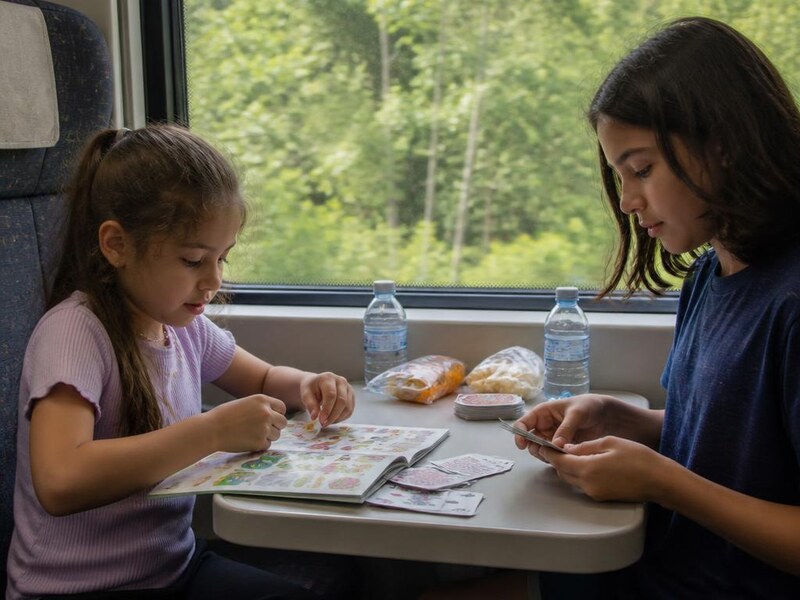
Once the novelty of the train wears off, we start the first rotation: 20 minutes of a card game, 20 minutes of a sticker book or coloring, then 20 minutes of a downloaded show or audiobook. The goal is not to keep the children constantly entertained; it is to change the type of attention they are using before boredom turns into frustration.
Hour 2: Snack, Stretch, and Look Outside
At about the two-hour mark, we pause for a snack and a short stretch. If the route and station timing allow, use a scheduled stop for a bathroom break and a few minutes of walking. If we stay on board, I turn the window into a scavenger hunt: a palm tree, a bird, a bridge, a town, and the next color of road sign.
My son once spent nearly half an hour searching for a howler monkey he was sure he had seen. He never found one, but he forgot to ask how much longer the train ride would be.
Hour 3 and Beyond: Repeat the Rotation, Do Not Add More Stuff
Longer segments work best when we repeat the same rhythm instead of revealing every surprise at once. After each cycle, the children get a choice between two activities. That small bit of control matters. We keep one emergency activity hidden for the final stretch, because opening the entire bag in the first hour guarantees that everything feels boring later.
Entertainment Rotation Strategies That Actually Work
Think in categories rather than individual toys. Our rotation has five lanes: looking out the window, cards or a compact game, stickers or drawing, downloaded audio/video, and a snack or stretch break. We move to the next lane when the current one stops working, not when a timer says we have to.
- Quiet hands: sticker books, coloring, magnetic puzzles, and activity pads that do not scatter across the floor.
- Shared play: simple cards, "I spy," travel bingo, and a family story where everyone adds one sentence.
- Screen time: download more than you expect to need, but reveal it in short blocks.
- Window time: let the Yucatán scenery do some of the entertaining; kids notice far more than adults expect.
A tablet is not a parenting failure on a long travel day. For our family, it is one tool in a larger rotation, and it works better because it is not the only tool.
Food and Snack Planning on the Train
Bring enough familiar food for the full ride plus a delay. Station vendors can be useful, but I never make a hungry child depend on finding the right snack at the next stop. Pack foods that are filling, low-mess, and easy to open: sandwiches, crackers, fruit, granola bars, and a small treat for the final stretch.
Give children small portions rather than handing over the whole snack bag. We carry water bottles and refill when practical, but avoid letting kids chug right before a long stretch between bathrooms. A zip-top bag for wrappers and a second bag for anything sticky are as important as the food itself.
Motion Sickness: Prevent It Before It Starts
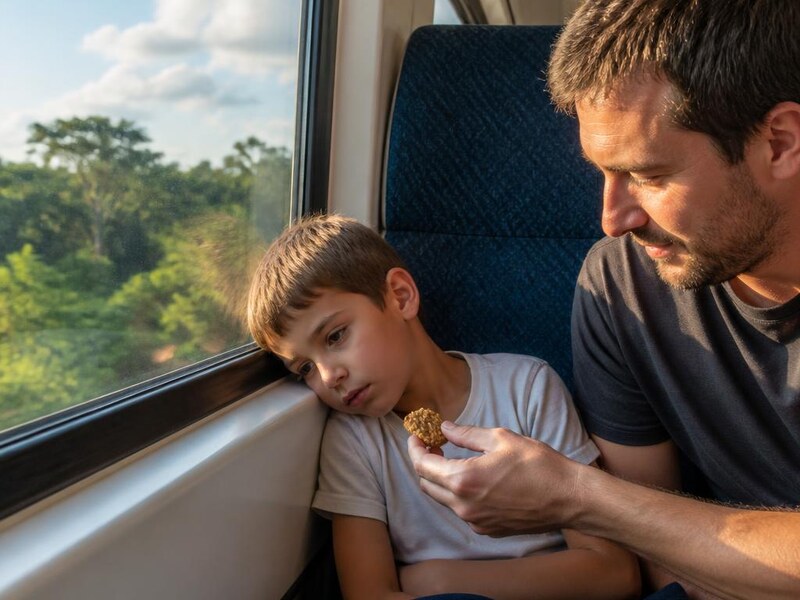
For a child who gets queasy, choose a forward-facing window seat if possible, keep the eyes up and on the horizon, and avoid books or screens during the most winding sections. Start with light food, offer small sips of water, and keep a disposable bag, wipes, and spare shirt within reach. I also ask our pediatrician ahead of time what motion-sickness option is appropriate for each child rather than experimenting on travel day.
Fresh air during a station stop, a cool cloth, and a calm voice can help more than a frantic search through the luggage. If your child looks pale or suddenly quiet, treat that as the warning—not as a behavior problem.
Bathroom Strategy for Families
Everyone uses the bathroom before boarding, even the child who insists they do not need to go. Then we try again before each scheduled stop and before handing out a large drink. I keep tissues, wipes, and hand sanitizer in the seat pocket, not buried under the luggage.
Take the first bathroom opportunity that feels convenient. Waiting until a child is desperate turns a normal walk down the carriage into a high-stakes emergency, especially when the train is moving or the aisle is busy.
Meltdown Protocol: What We Do When It Falls Apart
Meltdowns are not proof that the trip is failing. They are usually a tired, hungry, overstimulated child asking for a reset in the only language available. My sequence is predictable: lower my voice, move away from the activity, offer water or a small snack, and give two simple choices. "Window seat or quiet seat?" works better than "What is wrong?"
One parent handles the child while the other gathers the loose items and protects the siblings' quiet space. We do not lecture in the middle of the storm. When my daughter once dissolved over a lost sticker, I sat beside her, named the disappointment, and waited. Five minutes later she was watching jungle trees again.
Booking Recommendations for a Smoother Ride
Choose seats together and think about the direction of travel, the window view, and how easily you can reach the aisle. For families with younger children, a quieter class can be worth the premium if it makes naps and bathroom trips easier. For older kids, the livelier standard carriage can be part of the adventure.
Run the math on a bundled trip before booking separate pieces: Compare flight + hotel bundles alongside your train plans. A lower room rate can protect the rest of the family budget.
If your schedule is flexible, Check last-minute deals before locking in an expensive peak-date stay. For the room itself, Find incredible hotel deals and compare the total price, not just the nightly headline rate.
When plans may change, Find free-cancellation hotels so you can adjust without turning a weather delay or tired child into a financial disaster. It is also worth checking member prices on hotels before you pay.
For multi-night stays, Browse vacation rentals with kitchens if having breakfast and easy snacks where you stay will make the train days easier.
The Dad's Short Checklist
- Arrive early, use the bathroom, and board with water already available.
- Rotate window time, quiet games, stickers, audio/video, and snack breaks.
- Pack familiar food plus one emergency snack and a spare shirt.
- Watch for early motion-sickness signs and keep supplies reachable.
- Treat meltdowns as resets: lower your voice, offer two choices, and wait.
- Book seats, cancellation terms, and room type with your actual family rhythm in mind.
We still have imperfect train days. Someone forgets a water bottle, a game disappears under a seat, and one child always asks if we are there yet five minutes after departure. But with a rhythm, enough snacks, and a parent who stays calm, the Tren Maya becomes part of the holiday instead of the obstacle between destinations.
For more planning help, see our Skip Xcaret parks guide, cheap flights to Cancún, and the best time of year to ride the Tren Maya.
